
150 C to F – Exact Conversion Formula and Uses
One hundred fifty degrees Celsius converts to exactly three hundred two degrees Fahrenheit. This specific temperature point occupies the moderately hot range on both measurement scales, sitting significantly above water’s boiling point.
International recipes and scientific protocols frequently specify 150°C, requiring translation for equipment calibrated in Fahrenheit. Understanding this conversion ensures accuracy when using imported appliances or collaborating across measurement systems.
The transformation relies on a linear formula derived from the fixed freezing and boiling points of water. While digital calculators provide instant results, manual verification remains valuable in professional kitchens and laboratory settings.
What Is 150°C in Fahrenheit?
| Direct Answer 302°F |
Formula °F = (°C × 9/5) + 32 |
Scale Context 90°C above boiling |
Application Low-to-moderate ovens |
- 150°C equals exactly 302°F with no rounding required
- This temperature exceeds water’s boiling point (100°C/212°F) by fifty percent
- Domestic ovens typically display 300°F for this metric setting
- The conversion derives from fixed points established in the 18th century
- Industrial applications include drying, sterilization, and gentle roasting
| Celsius (°C) | Fahrenheit (°F) | Context |
|---|---|---|
| 0 | 32 | Water freezing |
| 37 | 98.6 | Human body temperature |
| 100 | 212 | Water boiling |
| 145 | 293 | Pastry baking |
| 150 | 302 | Target conversion |
| 155 | 311 | Calculated |
| 160 | 320 | Roasting meats |
| 180 | 356 | Standard baking |
| 200 | 392 | High heat cooking |
Reference tables confirm the 150°C to 302°F equivalence alongside adjacent temperature points source. Culinary guides note that while the mathematical conversion yields 302°F, oven interfaces commonly round to 300°F for user convenience source.
How Do You Convert Celsius to Fahrenheit?
The international standard formula multiplies the Celsius value by nine-fifths, then adds thirty-two. Mathematicians express this as °F = (°C × 9/5) + 32 or equivalently °F = (°C × 1.8) + 32 source. This linear equation reflects the offset between scales where water freezes at 0°C (32°F) and boils at 100°C (212°F).
For 150°C: (150 × 9) ÷ 5 + 32 = 1,350 ÷ 5 + 32 = 270 + 32 = 302°F source.
Manual Verification
Performing the calculation manually ensures accuracy when digital tools are unavailable. First, multiply 150 by 9 to obtain 1,350. Divide this product by 5, yielding 270. Finally, add 32 to reach 302°F. This arithmetic holds constant regardless of the specific temperature, providing a reliable method for converting any Celsius value to its Fahrenheit equivalent.
Modern kitchen appliances often display rounded values. While 150°C equals precisely 302°F, most oven controls show 300°F as the nearest standard setting source.
Alternative Calculation Methods
Some technicians prefer the decimal form of the fraction (1.8) for calculator entry. Multiplying 150 by 1.8 produces 270, with the addition of 32 confirming the 302°F result. Both methods yield identical outcomes, though the fractional form maintains exact precision in manual calculations.
What Temperature Is 150°C?
This measurement represents moderately hot thermal energy suitable for gentle cooking processes and industrial drying operations. In culinary contexts, 150°C (displayed as 300°F on rounded oven dials) provides sufficient heat for roasting root vegetables, baking delicate pastries, and slow-cooking meats without triggering excessive surface browning source.
Culinary Applications
European recipe standards frequently specify 150°C for dishes requiring steady, moderate heat. American equivalents set equipment to approximately 300°F. This temperature sits below the Maillard reaction threshold for many foods, allowing thorough internal cooking while maintaining lighter surface textures. Chefs use this setting for meringues, custards, and slow-roasted proteins.
Scientific and Industrial Uses
Laboratory ovens utilize 150°C environments for drying glassware and sterilizing heat-resistant equipment. Manufacturing facilities employ this temperature for controlled curing processes and moisture removal. Unlike cooking applications, scientific protocols require exact 302°F calibration without rounding tolerances.
How Did Temperature Measurement Standards Develop?
- : Daniel Fahrenheit establishes his scale using brine, water, and human body reference points, creating the 32°F freezing and 212°F boiling framework.
- : Anders Celsius proposes the centigrade system, initially reversing the current configuration with 0° at boiling and 100° at freezing source.
- : International standards organizations adopt the current Celsius definition, fixing the conversion formula as the global reference for scientific communication.
Is the 150°C Conversion Exact or Approximate?
Established Facts
- 150°C converts mathematically to exactly 302°F
- The formula derives from internationally fixed water phase points
- Linear conversion maintains precision across all temperature ranges
- Anders Celsius introduced his scale in 1742, providing measurement foundations
Practical Variations
- Individual oven calibration may vary ±5°F from displayed settings
- Altitude affects boiling points but not mathematical scale relationships
- Consumer equipment often rounds to 300°F for interface simplicity
- Sensor accuracy varies by equipment age and manufacturer specifications
Different measurement systems serve financial and thermal contexts globally. Currency conversions like 325 USD to CAD demonstrate similar international standardization needs.
Where Does 150°C Appear in Practical Contexts?
Beyond domestic cooking, this temperature serves critical functions in pharmaceutical manufacturing and materials testing. Food processing facilities maintain 150°C environments for pasteurization protocols, ensuring pathogen elimination while preserving nutritional integrity. The metric specification allows seamless international equipment calibration. If you’re interested in understanding the quantitat de pes que es pot perdre en una setmana, you can find more details at the provided link. quantitat de pes que es pot perdre en una setmana
Automotive and aerospace industries utilize this temperature threshold for composite curing and stress testing. Scientific research facilities rely on precisely controlled 150°C (302°F) chambers for sample preparation. These applications underscore the importance of exact conversion accuracy across technical disciplines.
What Sources Verify This Conversion?
150°C equals exactly 302°F using the standard conversion formula. This temperature serves as a moderate oven setting for gentle roasting and baking applications.
— Recipes and Places Temperature Reference
The formula °F = (°C × 9/5) + 32 provides the internationally accepted linear method for converting Celsius measurements to Fahrenheit equivalents.
— Calculat.io Scientific Database
What Is the Quick Answer for 150°C to °F?
One hundred fifty degrees Celsius equals exactly three hundred two degrees Fahrenheit. This moderately hot temperature, commonly rounded to 300°F on domestic oven displays, supports culinary, scientific, and industrial applications requiring precise thermal control. For additional measurement standards and financial reference data, see Prime Interest Rate Canada.
Why does my oven display 300°F instead of 302°F?
Manufacturers round to the nearest 5 or 10 degrees for simplified interface design, displaying 300°F for the 150°C (302°F) setting.
Is 150°C considered hot?
Yes, this temperature exceeds water’s boiling point by 50 percent, falling into the moderate-to-high range for cooking and industrial processes.
Can I use the same formula for freezing temperatures?
The formula °F = (°C × 9/5) + 32 applies linearly to all temperatures, correctly converting -40°C to -40°F and 0°C to 32°F.
What foods cook well at 150°C?
This temperature suits gentle roasting of vegetables, baking delicate pastries, and slow-cooking meats without excessive surface browning.
Who created the Celsius scale?
Swedish astronomer Anders Celsius developed the scale in 1742, initially proposing a reversed configuration where water boiled at 0° and froze at 100°.
Does altitude affect the 150°C conversion?
While altitude changes boiling points due to air pressure, the mathematical conversion from 150°C to 302°F remains constant regardless of elevation.
More related posts
 Steve Wozniak Net Worth: Why He’s Not a Billionaire & Never CEO
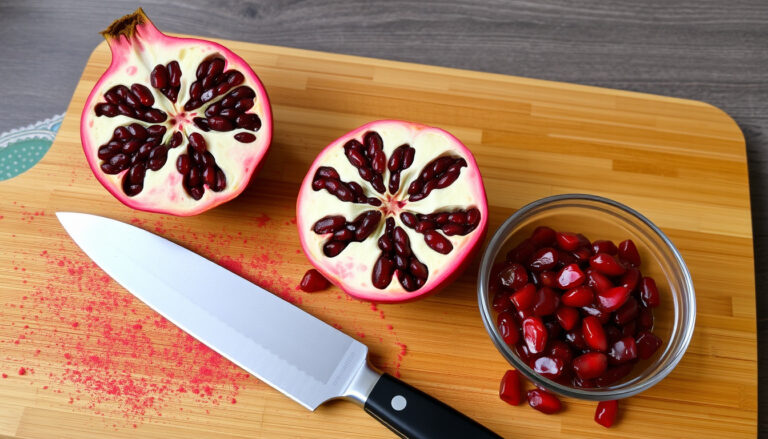 How to Cut a Pomegranate: 3 Easy Methods for Mess-Free Seeds
 James Spader Movies And TV Shows – Complete List And Best Roles
 Kansas City Chiefs Game – 2024 Results and 2025 Schedule
 Where to Watch The Bear: Streaming Guide by Region & Season
 Nova Scotia Missing Children Update: Lilly & Jack Sullivan Latest
 Kourtney Kardashian: Relationship, Autosexual, Baby Health
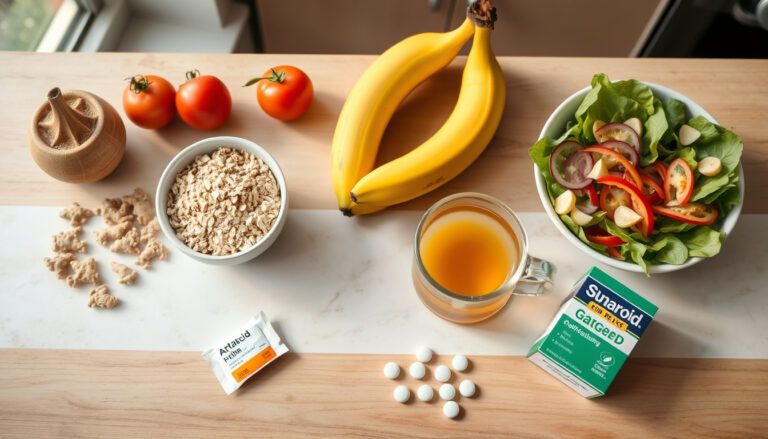 Gastroesophageal Reflux Disease: Symptoms, Treatment & Diet Guide
