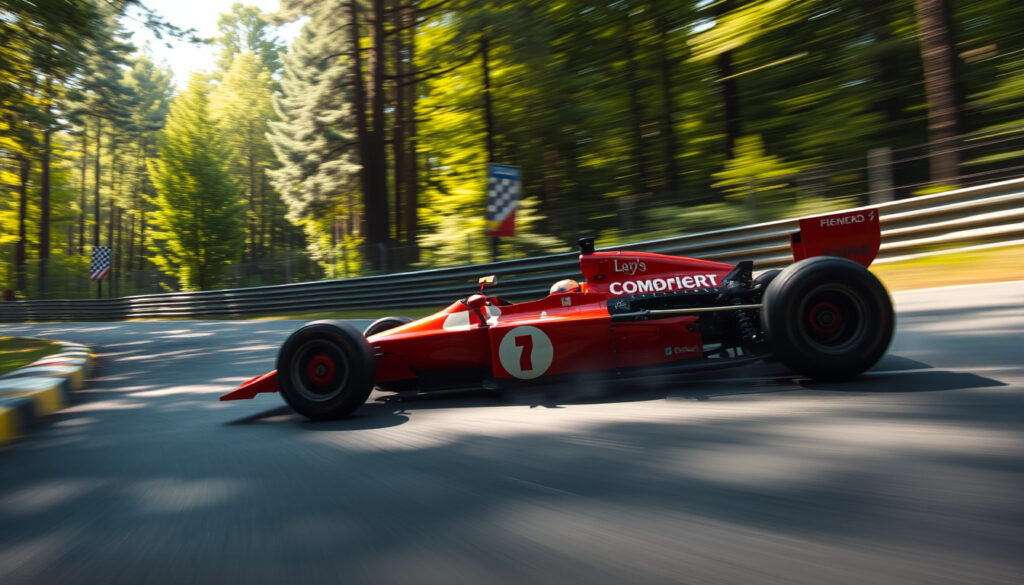
Gilles Villeneuve: Ferrari Legend, Rivalry & Zolder Crash
For anyone who grew up following Formula 1 in the late 1970s, the name Gilles Villeneuve still carries a specific weight — equal parts awe and sorrow. He drove like he had nothing to lose, and on 8 May 1982 during qualifying for the Belgian Grand Prix at Zolder, that fearlessness ended his life at age 32.
Full name: Gilles Villeneuve · Born: 18 January 1950, Montreal, Canada · Died: 8 May 1982, Zolder, Belgium · F1 seasons: 1977–1982 · Wins: 6 Grands Prix · Teams: McLaren, Ferrari
Gilles Villeneuve’s career in numbers.
Quick snapshot
- Date of death: 8 May 1982 at Zolder, Belgium (Wikipedia – Grand Prix entry)
- Ferrari withdrew from the race after the crash (Wikipedia – 1982 Belgian GP)
- Enzo Ferrari called Villeneuve the greatest driver he ever had (Motorsport.com – Ferrari legacy)
- Exactly why the Ferrari touched the March of Jochen Mass – possible mechanical fault or misjudgment (Red Bull F1 – crash analysis)
- Whether Villeneuve was deliberately trying to beat Pironi’s lap time or simply on a fast qualifying lap (Wikipedia – Didier Pironi)
- 25 April 1982: Pironi overtakes Villeneuve despite team orders at Imola (Autosport – rivalry report)
- 8 May 1982: Villeneuve dies at Zolder (Wikipedia – 1982 Belgian GP)
- Pironi suffers a career-ending crash at Hockenheim later in 1982 (Wikipedia – Pironi)
- Circuit Gilles Villeneuve in Montreal becomes a permanent memorial (Wikipedia – Gilles Villeneuve)
| Attribute | Value |
|---|---|
| Full name | Gilles Villeneuve |
| Born | 18 January 1950, Montreal, Quebec, Canada |
| Died | 8 May 1982, Zolder, Belgium |
| F1 career | 1977–1982 (67 races) |
| Wins | 6 |
| Pole positions | 2 |
| Fastest laps | 8 |
| Best championship finish | 2nd (1979) |
What happened to Gilles Villeneuve?
The accident that took Gilles Villeneuve’s life occurred during the final qualifying session of the 1982 Belgian Grand Prix at the Zolder circuit. His Ferrari 126C2 touched the rear wheel of Jochen Mass’s March at the Terlamenbocht corner, a moment described in race reports as a near‑miss that turned catastrophic (Red Bull F1 – crash reconstruction).
- Mass moved right to give Villeneuve room, but Villeneuve also moved right, creating the collision path (Red Bull F1).
- The impact launched the Ferrari into a cartwheel sequence – the car disintegrated (Red Bull F1).
- Villeneuve was thrown from the cockpit and suffered fatal injuries; he was 32 (Wikipedia – 1982 Belgian GP).
The tragedy unfolded just 13 days after the San Marino Grand Prix, where Villeneuve’s teammate and rival Didier Pironi had overtaken him against team orders (HistoryRacingPedia – rivalry context). Many observers have linked the emotional tension from that incident to Villeneuve’s aggressive push during Zolder qualifying.
The exact trigger for the wheel contact remains debated. Some sources suggest Villeneuve misjudged Mass’s line; others point to a possible mechanical failure. Neither explanation has been conclusively proven.
Why is Gilles Villeneuve so famous?
Gilles Villeneuve’s fame rests on a driving style that was spectacular, fearless, and out of control just often enough to be unforgettable. He won only six Grands Prix and never a World Championship, yet Enzo Ferrari placed him above every other driver the Scuderia had employed. “He was the greatest driver I ever had,” Ferrari said after Villeneuve’s death (Motorsport.com – Ferrari’s tribute).
Part of the legend comes from his sheer commitment. Villeneuve would slide his car on the edge of the tyres for entire laps, trading consistency for raw speed. His 1979 season, when he finished second in the championship behind teammate Jody Scheckter, showcased that duality – fast enough to lead, but prone to the mistake that cost him the title (Wikipedia – Gilles Villeneuve).
Villeneuve’s win count is modest, but his impact was immense – a driver who could thrill even when he lost.
The tragedy of his death at age 32 – still near his prime – cemented him as a martyr of the sport. Today, the Circuit Gilles Villeneuve in Montreal keeps his name alive every year when Formula 1 visits Canada (Wikipedia – Gilles Villeneuve), and his son Jacques Villeneuve won the World Championship in 1997, ensuring the Villeneuve name remains central to F1 lore.
Did Enzo Ferrari like Gilles Villeneuve?
Enzo Ferrari’s affection for Gilles Villeneuve went well beyond professional respect. In interviews after Villeneuve’s death, the Commendatore called him “the greatest driver I ever had” and made clear that no other Ferrari driver – not even Michael Schumacher or Niki Lauda – had earned that kind of personal endorsement (Motorsport.com – Ferrari’s praise).
Ferrari was known to be sentimental about drivers who reminded him of the pure, pre‑commercial era of racing. Villeneuve’s refusal to play political games – a trait Niki Lauda later described as naive – actually endeared him to Ferrari. “He had no interest in politics,” Lauda said in a later interview. “He just wanted to go fast.” (Autosport – Lauda comment)
The relationship was mutual. Villeneuve had turned down offers from other top teams to stay with Ferrari until the end of his career. When he died, Ferrari withdrew the team from the Belgian Grand Prix, a rare gesture that reflected the depth of the bond (Wikipedia – 1982 Belgian GP).
Enzo Ferrari’s personal favoritism gave Villeneuve a protected status inside the team. When that protection was undermined by Pironi’s disobedience at Imola, the balance of power shifted – and the emotional fallout contributed to the chain of events at Zolder.
The implication: Ferrari’s internal culture, built on loyalty, cracked under the strain of a driver who put personal ambition above team orders.
What happened between Villeneuve and Pironi?
The feud between Gilles Villeneuve and Didier Pironi defined the 1982 Ferrari season before tragedy turned it into folklore. At the San Marino Grand Prix on 25 April 1982, Pironi ignored what the team believed was an order to hold position, overtaking Villeneuve on the final lap to take the win (Autosport – rivalry details).
- Villeneuve felt betrayed; he had been following a board from the pit wall that read “SLOW” – meaning hold position – but Pironi had interpreted it differently (Motorsport.com – Imola controversy).
- After the race, Villeneuve vowed never to speak to Pironi again. The two drivers did not exchange a word in the two weeks between Imola and Zolder (Wikipedia – Didier Pironi).
- At Zolder, Pironi had set a qualifying time 0.1 seconds faster than Villeneuve for sixth place (Wikipedia – 1982 Belgian GP). Many believe Villeneuve was pushing to beat that time when the crash happened.
Pironi later expressed deep regret over both the Imola incident and the crash. He himself suffered a severe qualifying crash at the German Grand Prix later in 1982, never raced in Formula One again, and died in a powerboat accident in 1987 (Wikipedia – Didier Pironi).
What did Niki Lauda think of Gilles Villeneuve?
Niki Lauda, a three‑time World Champion and a man known for his clinical analysis of drivers, spoke of Villeneuve with a mix of admiration and frustration. “He was one of the fastest drivers I ever competed against,” Lauda said in interviews collected by Autosport. “But he had no political sense. He thought you just had to drive fast to win.”
Lauda valued survival as much as speed; Villeneuve valued speed above all else. Yet Lauda acknowledged that Villeneuve’s natural talent exceeded his own in pure reflexes. In his autobiography, Lauda wrote that Villeneuve could handle a car on the limit longer than any other driver – but that same limit was what killed him.
Lauda’s own success came from controlling risk, yet he admired the man who had zero risk control. It’s the tension that makes Villeneuve a lasting figure: the sport remembers the winners, but it mythologizes the ones who could have won if they had just slowed down a fraction.
What this means: Lauda’s respect for Villeneuve underscores a fundamental split in racing philosophy – one that still divides fans today.
Timeline of key events
- 18 January 1950 – Gilles Villeneuve born in Montreal, Canada. (Wikipedia – Gilles Villeneuve)
- 1977 – F1 debut at British Grand Prix with McLaren; moves to Ferrari mid‑season. (Wikipedia – Gilles Villeneuve)
- 1978 – Scores first win at Canadian Grand Prix. (Wikipedia – Gilles Villeneuve)
- 1979 – Finishes 2nd in World Championship behind Jody Scheckter. (Wikipedia – Gilles Villeneuve)
- 25 April 1982 – San Marino Grand Prix: Pironi overtakes Villeneuve against team orders. (Autosport – rivalry details)
- 8 May 1982 – Villeneuve dies during qualifying at Zolder. (Wikipedia – 1982 Belgian GP)
- August 1982 – Pironi suffers career‑ending crash at German Grand Prix. (Wikipedia – Didier Pironi)
The pattern: each event built on the previous, sharpening the rivalry that ended in tragedy.
What’s confirmed and what’s still unclear
Confirmed facts
- Villeneuve died on 8 May 1982 at Zolder (Wikipedia).
- His Ferrari touched the rear of Jochen Mass’s March (Red Bull F1).
- Ferrari withdrew from the race after the accident (Wikipedia).
- Enzo Ferrari called him his greatest driver (Motorsport.com).
What remains uncertain
- Exact cause of car failure – mechanical fault or wheel‑to‑wheel contact? (Red Bull F1)
- Whether Villeneuve deliberately tried to pass Pironi at that moment or was on a normal qualifying lap (Wikipedia).
- Whether the team orders at Imola were explicit or implied – Pironi argued he had no clear instruction to hold position (Autosport).
- Whether Villeneuve’s emotional state directly caused him to push beyond the limit at Zolder (HistoryRacingPedia).
- Whether the crash would have been avoided had the Imola incident not occurred – a counterfactual that remains speculative.
The catch: without conclusive evidence, the Zolder crash remains a puzzle with pieces that may never fully fit.
Voices from the era
“He was the greatest driver I ever had.”
Enzo Ferrari, quoted in Motorsport.com
“He was one of the fastest drivers I ever competed against. But he had no political sense.”
Niki Lauda, as reported by Autosport
“I didn’t mean to do it. I didn’t mean to cause what happened.”
Didier Pironi, reflecting on Imola and Zolder, per Wikipedia
These voices, from different perspectives, all point to the same conclusion: Villeneuve’s death was a collision of talent, emotion, and circumstance.
Why the Zolder crash still matters
The death of Gilles Villeneuve did more than remove a single driver from the grid. It exposed the fragility of team dynamics inside Ferrari, the danger of unresolved personal conflict in motorsport, and the fine line between courage and recklessness. For fans who watch old races and wonder what could have been, the answer is clear: a driver who might have become a multiple champion instead became a cautionary tale. And for Ferrari, losing a driver who was personally singled out by Enzo Ferrari meant a loss that the team has never fully replaced. Villeneuve’s legacy demonstrates that raw talent, without political backing, can win admiration but may not ensure a long career.
For more on racing family connections, see Kelly Piquet. For other sports legends, see Muhammad Ali.
youtube.com, motorsportguides.com, facebook.com, reddit.com, forums.autosport.com, reddit.com
Frequently asked questions
Is Gilles Villeneuve related to Jacques Villeneuve?
Yes, Jacques Villeneuve is his son. Jacques won the Formula 1 World Championship in 1997.
How many F1 races did Gilles Villeneuve win?
He won 6 Grands Prix – five with Ferrari and one with McLaren.
What team did Gilles Villeneuve drive for?
He drove for McLaren briefly in 1977, then for Ferrari from 1977 until his death in 1982.
Where is the Circuit Gilles Villeneuve located?
It is located on Notre Dame Island in Montreal, Canada, and hosts the Canadian Grand Prix.
Did Gilles Villeneuve ever win a world championship?
No. His best result was 2nd place in the 1979 season behind teammate Jody Scheckter.
How old was Gilles Villeneuve when he died?
He was 32 years old.
Who caused the crash at Zolder that killed Villeneuve?
The crash was a racing incident. Villeneuve’s Ferrari touched Jochen Mass’s March at the Terlamenbocht corner; no single driver was officially blamed.
More related posts
 Liev Schreiber: Biography, Career, and Personal Life
 150 C to F – Exact Conversion Formula and Uses
 Walnut Grove Community Centre: Gym, Pool, Library & More
 Carl Gallagher: Character Guide, Ending & Actor News
 Candace Owens: Verified Facts and Controversies 2025
 Victoria Justice: Relationship, Health, Career Updates (2024)
 Melissa Gilbert: Life, Career, and Misophonia Struggles
 Megan Fox: Kids, Relationships, Health Diagnosis, and Career
